Choose your language:

FLOWER GARDEN
Garden Flowers, Garden Plants and Types of Flowerswww.Flowers-Gardens.net |
|
Search | BROOM FlowerBROOM
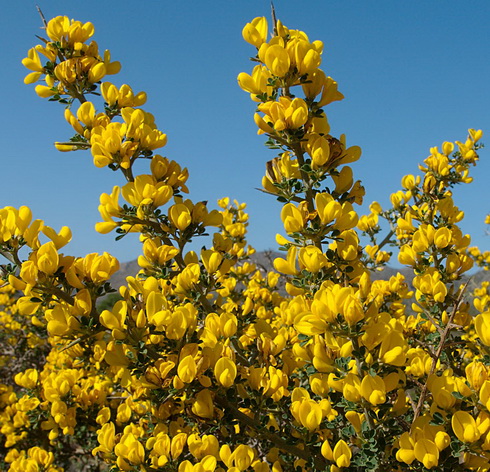
BROOM: The Plant. This name is given both to cytisus and genista, hardy spring and summer flowering shrubs of great garden value. They thrive particularly well on poor or light land. When planting brooms it is important to choose small plants which have been grown in flower pots; large plants lifted from the open ground are liable to fail. Some of the brooms are tall shrubs suitable for grouping in the flower garden and shrubbery; others are of low growth and may be grown in the rock garden. Of the tall kinds, which bloom in spring or early summer, some of the most beautiful are Cytisus albus, white, praecox, cream, scoparius, the common yellow broom and its variety andreanus, bronze red and yellow. Beautiful low growing brooms are Cytisus Ardoinci, yellow, kewensis, cream, and Beanii, yellow. The genistas are in full beauty in summer—all have yellow flowers The brooms come readily from seeds, which may be sown outside as soon as they are ripe, or in spring in a cold frame. Cuttings strike in sandy soil if inserted under a hand light in summer or early autumn. Layers may be put down in autumn. A greenhouse species, genista, much grown by market gardeners, is a neat shrub with small, sweet-smelling golden flowers, continuing in bloom for a long time. It is grown in soil composed of two parts loam, one part peat and sand. Propagation is by cuttings in spring. preferably in a propagator. Small pieces of the new wood root readily in sandy peat, the more so if a heel of older wood is taken with the cutting. The plants which result should have the points taken off when they are 6 in. high, in order to cause them to break, and the side shoots thus obtained should also be stopped when about 4 in. long; this ensures neat bushes with several branches. From May to midsummer the plants may be kept in a cold frame, and watered and syringed regularly. From that time to October they will be better on a bed of ashes in the open. They should be housed in autumn. A winter temperature of 45° to 55° will suit them. After they have flowered they may be cut hard back, re-potted, and syringed. They will then break afresh, and, after the necessary cuttings have been taken, may be hardened in the frame. Share in: |
 |
