Choose your language:

FLOWER GARDEN
Garden Flowers, Garden Plants and Types of Flowerswww.Flowers-Gardens.net |
|
Search | BULB FlowerBULB Plant
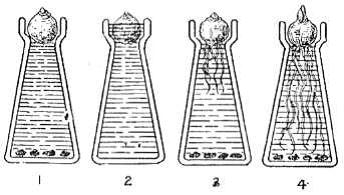
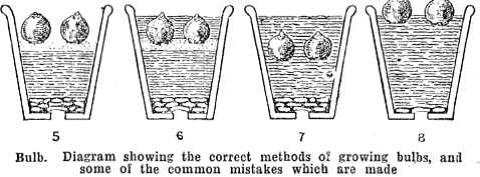
BULB: How to Grow. In the popular sense bulbs include daffodil, hyacinth, narcissus, iris, tulip, crocus, lily, snowdrop, and many others, some of which are not really bulbs, but rhizomes or corms Bulbs should be heavy in proportion to their size. Soundness may be tested by pressing the thumb on the hollow at the base; this will be firm if the bulb is sound and soft if the bulb is unsound . Reject all soft , spongy bulbs. Flower growth must be preceded by strong, healthy root action, and the cultivator should give it every encouragement. Both size and weight have to be considered in selecting bulbs Hyacinths are graded and sold at different prices according to grade. A bulb about 5/2 in through in its thickest part is a first size bulb, and will command the best price for the particular variety. Nevertheless, a bulb is often less than 2 in. through and still a first size bulb, as the varieties differ in respect of the size of their bulbs. The bulbs of daffodils, tulips, and lilies vary a good deal in size. If lily bulbs are shrivelled they should be laid in coconut fibre refuse about a fortnight before planting. There is no better compost than three parts of sound loam, one part of thoroughly decomposed leaf-mould, half part of decayed cow manure, and sufficient coarse sand to ensure the free passage of water. The compost should be thoroughly m i x e d some time before it is required for potting. It should be moist but not sodden. If new pots are used, they should be well soaked for several hours, and allowed to dry. In the diagram show correct potting , with ample drainage, and the bulbs resting on a base of silver sand. Bulbs should not be planted deeply, or too much above the badly drained soil. To drain, place a large piece of broken pot over the drainage hole, smaller pieces over and around it, and still smaller pieces above these, then some of the rougher parts of the compost. Bulbs Grown in Water. Bulbs are also grown in glasses of water, rainwater when possible. To keep it pure, a few pieces of charcoal are put into the glass, as shown in the diagram. It is not necessary for the bulb to touch the water ; it should rest just above the surface, as in Fig. 1, not in the water as in Fig. 2. Loss of water must be made good from time to time. Bulbs in glasses are best kept in a dark cupboard until they have made considerable root growth, as shown in Figs. 3 and 4 of the diagram Staking is sometimes essential, and wire supports should be employed. Some bulbs, more especially the bunch-flowered narcissi, do well in bowls when placed among pebbles and water, but the more customary method for indoor culture is to plant in a mixture of shell and fibre. The mixture at the start should be fairly damp. A good deal of wetting and turning will, be needed to get it to this stage. Such bulbs as hyacinths, tulips, and narcissi should be planted in the bowls so that the crown of the bulb just shows above the mixture. They should be kept in a dark, cool cupboard or cellar for six or eight weeks. Bulbs for Table Decoration. For table decoration, at a time of year when cut flowers are scarce and dear, relays of bowls should be planted with bulbs from August till December ; the earlier plantings ensure a floral display at the close of the year. Bowls filled with flowering bulbs of the dwarf scarlet tulip look attractive on the Christmas dinner table, while hyacinths brighten the sitting-rooms. As the flowers themselves form the pattern of the decoration, the plainer the bowls are in design the better, and they should be chosen to harmonise in colour both with the room and the bulbs when in flower. Black Wedgwood bowls enhance the brighter hues, while green potteiy, matching the leaves and layer of moss which should hide the crowns of the bulbs, also looks well. Daffodils in shiny brown and pink tulips or hyacinths in greyish-blue stoneware bowls arc effective in most rooms. See Crocus; Daffodil; Hyacinth; Tulip, etc.
Share in: |
 |
